KOSHER RECIPES FOR GLUTEN-FREE LIVING


Showing posts with label potatoes. Show all posts

Sunday, September 14, 2008

The Quest for the Best Gluten-Free Cholent

rival crock-pot versaware pro crockpot slow-cooker

This shabbos, I finally found one of the holy grails of kosher gluten-free cooking - A fantastic gluten-free cholent. I crafted this Ashkenazi/Sephardi fusion cholent by accident, really. Cholent is a stew that cooks slowly in a crockpot during Shabbos (the Jewish sabbath, during which observant Jews do not light or extinguish fires or electricity) without being stirred or having the heat adjusted in any way. It's the ultimate in low-maintenance cooking, since you just add a bunch of ingredients to the crockpot and let them cook overnight with no interference. People who've never tried slow cooking in a crockpot might think that all the ingredients would be mush after so much cooking - Strangely enough, vegetables tend to retain their shape and stay fairly firm during crockpot cooking. The meat, which should preferably be from a tougher cut (tough cuts do best with slow cooking in liquid), will become deliciously tender and fall apart when you stick your fork into it. Ashkenazi cholent is usually made with barley or wheat berries, neither of which people with celiac disease or gluten intolerance can eat. But you won't miss the grains with this cholent, as it's unbelievably flavorful and has a variety of textures.

The Sephardi influence on this dish is the use of spices and flavorings that you wouldn't normally find in an Ashkenazi cholent (paprika, lots of garlic, turmeric), as well as the optional addition of whole in-the-shell eggs which become hardboiled over the course of the slow-cooking process. This is a little more decadent and a little more healthy than your average cholent. It wouldn't be an exaggeration to say that this dish has completely changed my conception of cholent. It's heavy but doesn't sit in your stomach like a rock, as some cholent does. My partner is a cholent-eating afficionado and she gave this one two thumbs up.

I sauteed the meat to brown it about 1/2 hour before candlelighting on Friday (a little before 7) and then transferred it, along with all the other ingredients, to the crockpot. My crockpot (pictured above) automatically switches to its warm setting as soon as the cooking time you set it for is done - So at about 7 in the morning on Saturday it switched over, and we ate it at 12:30 PM. It was hot, and perfectly cooked. We ate the leftovers for lunch today and my partner mentioned that this was the first time she'd had the desire to eat leftover cholent. But then again, this is no ordinary cholent!

A little disclaimer: I call for "powdered gluten-free onion soup, vegetable or chicken soup mix." Most kosher soup mixes have MSG in them. That's part of what makes them so tasty. I generally refuse to purchase or consume anything with MSG. But this is my exception. It's my little vice, I guess. If you must avoid MSG at all costs, you can use a couple of gluten-free MSG-free bouillon cubes instead. I've found a kosher, gluten-free brand called Bloch's Best that has no MSG. It's imported from Europe - I found it at Natural Spot in Teaneck. They won't be quite as flavorful as the mixes with MSG, so if you like you can use more salt and more spices and a little more white wine to make up for it.

If you don't have a slow-cooker you can still make this dish - Bring the ingredients to a boil, reduce to a simmer, then right before shabbos cover the pot very tightly and either simmer over a low flame all night, or have it cook in the oven on a low setting.

I will be happy if thise recipe helps just one other gluten-free Jew have more joyful and delicious shabbos... and even happier if some non-Jews and/or non-celiacs will discover this as a new way to prepare a filling one-pot meal.

GLUTEN-FREE CROCKPOT
CHOLENT / HAMIN


A Slow-Cooked Meat & Bean Stew for Shabbos and Every Day

[ Gluten-Free / Dairy-Free / Soy-Free ]

1 Tbsp vegetable oil
1 lb to 1 1/2 lbs cholent meat / stew beef
1 onion cut into chunks
2 cups dry cholent bean mix or any combination of pinto beans, cranberry beans, white beans and/or kidney beans
3 Tbsp powdered gluten-free onion soup, vegetable or chicken soup mix*
1 or 2 carrots cut into 1" slices
5 medium yukon gold potatoes, unpeeled, cut in half
2 large sweet potatoes, peeled, cut in quarters
1 cup sliced white mushrooms
5-10 cloves of garlic, chopped roughly or sliced
1 tsp turmeric
2 tsp smoked paprika
2 bay leaves
1 tsp salt
1 tsp ground black pepper
Optional: Generous dash of white wine
Optional: 2-4 uncooked eggs in their shells

[*I use Osem's pareve, vegetarian, kosher-for-Passover "Chicken Style Consomme Instant Soup & Seasoning Mix" which is gluten-free. I purchase it at Passover to last me year-round since the rest of the year their formula includes gluten.]


In a pan, or in the ceramic liner of your crockpot (if it's the type that can be removed from the element and used like a pot on the stove) heat 1 Tbsp vegetable oil over medium heat. Add onions and sautee for 2-3 minutes. Add meat and cook only until browned on the outside. Move onion and meat mixture into the crockpot (or move your ceramic liner back onto the heating element of the crockpot). Set it so that it will cook on low for 12 hours and then switch to its warm setting.

Add dry (unsoaked) beans, then potatoes. Add all of the rest of the ingredients except for the eggs, distributing ingredients as evenly as possible. Make sure the meat won't touch the lid of the crockpot. Nestle eggs carefully on top of other ingredients. Pour water into the crockpot until it covers everything. Put the lid on, making sure it fits securely so that steam doesn't escape (use a layer of tin foil underneath if necessary).

Do not stir the cholent until you are ready to eat it, at which point you can remove the eggs so that you don't crack their shells, and stir it VERY gently.

Serve in bowls, topped with the now-hardboiled eggs (if you included them). If you've warmed your favorite gluten-free bread or challah on the top of the crockpot you can use it to sop up the stew.

NOTE: This recipe is for a 6-quart crockpot. For a smaller crockpot, reduce all the quantities slightly. No exact measurements are necessary for this recipe.

Friday, February 22, 2008

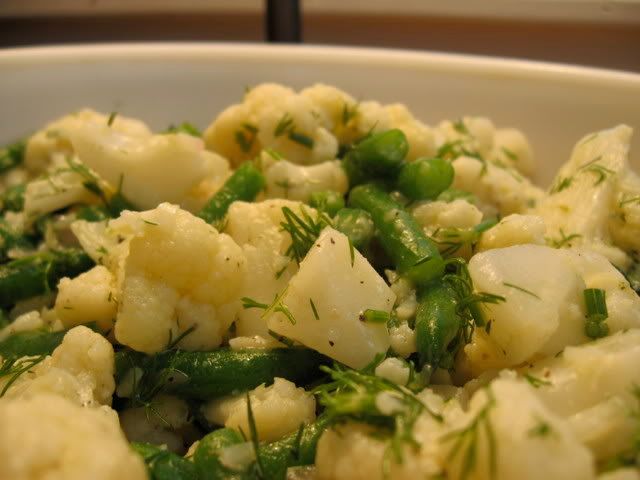
Herbed Cauliflower & Green Bean Salad A/K/A German Potato Salad Without the Potatoes


I've been having quite a hankering for German potato salad - Specifically, my "famous" Herbed New Potato Salad with Green Beans. Unfortunately, potatoes are super high-glycemic and are not considered "good" carbohydrates, and thus are verboten on the South Beach Diet, any low-carbohydrate diet, and the Glycemic Index / low-gylcemic approach to eating. What's a serious potato lover to do? Cauliflower!

I love cauliflower. I always have. Since eating a lower-glycemic diet I've been cooking my Lemon-Roasted Cauliflower with Dill and other roasted cauliflower recipes quite a bit. Another favorite cauliflower dish is my Aloo Gobi Mattar (Indian Potato, Cauliflower & Pea Curry) which I will also try making without potatoes one of these days.

Simply by replacing new potatoes with small florets of cauliflower boiled until tender, I was able to re-make this recipe into something healthier, more nutrient-dense and dramatically lower carbohydrate, without compromising the taste. I loved this salad, and it was even better a day and two days later when the cauliflower and beans had absorbed more of the marinade overnight.

I make a lot of salads and vegetable dishes that can be eaten cold on Shabbos since I don't cook on the sabbath. So I made this Friday to eat with my dinner, but also ate it for part of my lunch on Saturday. Heck, I even ate it for breakfast!

HERBED CAULIFLOWER & GREEN BEAN SALAD

[ Vegan / Dairy-Free / Pareve / Soy-Free / Gluten-Free ]

2 large heads of cauliflower
2 1/2 cups green beans, cut in thirds
2 Tbsp salt
1/4 cup minced fresh chives
3 Tbsp minced fresh dill
3 Tbsp dijon mustard
3 Tbsp apple cider vinegar
1/2 cup extra-virgin olive oil
1 large shallot, minced
1 tsp agave nectar, sugar or equivalent non-sugar sweetener
1 tsp freshly ground black pepper
Optional: Minced fresh flat-leaf parsley to taste

Combine all ingredients except cauliflower and beans in a large bowl. Wash cauliflower well and cut into 1/2 inch pieces. Cover with water by several inches in a large pot, and add 2 Tbsp salt. Bring to a boil, then reduce heat to medium-low and simmer until the cauliflower are tender without being mushy. Do not turn heat off, but transfer cauliflower into a colander immediately, and rinse with cold water several times. Allow to cool just until they are warm but can be comfortably handled.

Turn the heat up under the pot of water and add green beans. Cook uncovered for just a few minutes, until green beans are tender but still crisp and bright. Remove from water and drain. If you want to retain the brightness of their color, submerge them immediately in ice-water until cooled.

Add beans and cauliflower to the large bowl that contains dressing. Toss very gently to combine, stirring from the bottom to coat cauliflower and beans with the dressing. Allow to sit for 20 minutes before serving. Garnish with additional chopped herbs if desired. Serve while still warm, or at room temperature.

This recipe is part of the Weekend Herb Blogging event, hosted this week by Swirling Notions.

Wednesday, December 05, 2007

Sweet Potato & Leek Latkes

gluten-free sweet potato latkes

Everyone in my family's been trying to eat a lower-glycemic, more nutritionally sound diet for a plethora of health reasons, so I thought we could do with a little change of pace this Chanukah. Breaking with tradition is always hard, but it can also be a good opportunity to try new recipes and create new relationships with ingredients. Tonight's experiment was one of those times when pushing the boundaries of "Jewish food" was well worth it. You may have noticed I am a big fan of the fried leek. In these latkes, the warm, mellow onion flavor of leeks compliment the sweetness of the sweet potatoes.

In addition to being healthier than traditional potato latkes, these sweet potato pancakes have a few other differences. They are less messy and easier to make. Because they don't have the potato starch that is so plentiful in white potatoes, they need a lot more help binding - Additional eggs and potato starch will do the trick (if you don't have potato starch, try tapioca or sweet rice flour - But stay away from grainier gluten-free flours such as regular white rice flour). Even with extra binder added, they have a looser and less sticky consistency so they need to be formed and placed in the oil and flipped with extra TLC. They take a bit longer to cook than regular white potato pancakes, so make sure to keep the oil turned down just a little below the heat you'd use for white potato latkes which will give them longer for the insides to cook before they become crispy around brown around the outer edges.

I recommend serving these tasty vegetable pancakes with sour cream or non-dairy cashew sour cream, but applesauce also works as a condiment. Chag sameach!

gluten-free sweet potato latkes

SWEET POTATO & LEEK LATKES


[ Gluten-Free / Dairy-Free / Pareve /
Vegetarian / Soy-Free ]


3 extra large sweet potatoes
3 large leeks
5 eggs, beaten
1/2 cup potato starch (not potato flour)
1 tsp salt
Freshly ground black pepper
Refined vegetable oil (preferably canola or corn oil)

Preheat oven to 200F (if you will need to keep the latkes warm).

Cut sweet potatoes lengthwise so that they are narrow enough to fit through the shoot of a food processor. Using the grater attachment of a food processor, shred the sweet potatoes. Alternately, use the largest holes on a box grater to grate the potatoes by hand.

Rinse the leeks well. Cut the dark green tops off of the leeks, as well as removing the roots from the very bottom. Cut in half lengthwise, and then slice widthwise in very thin slices. Combine the leeks with the grated potato in a large mixing bowl. Add salt, egg, and a generous amount of black pepper. Gently sprinkle potato starch across the top, then stir to combine thoroughly.

Heat 1/3 inch of olive oil in a large, heavy skillet over medium-high heat, until just below the smoking point.

Use your hands to pat a small handful of batter into a small, thin (no more than 1/3" thick) pancake. Gently lower each pancake into the hot oil. Press each latke with the back of a slotted spatula so that it becomes flatter and thinner. Fry until completely golden-brown on the bottom and crispy around the outside corners. Flip and brown on the second side. If the outside is getting browned and crispy before the inside has a chance to cook sufficiently, turn the burner down just slightly.

Transfer latkes to a plate lined with paper towels or several layers of brown paper (I use grocery bags). Allow paper to absorb excess oil, then transfer latkes to a cooling rack placed over a baking sheet in the preheated oven, where they will stay warm until ready to serve. Serve hot.

Extra latkes can be frozen on a baking sheet in the refrigerator, with parchment paper or freezer paper between the layers. When frozen, transfer to ziploc bags. Reheat in oven on 400 degrees F.

Serves 4.

Sunday, September 02, 2007

My Famous Herbed New Potato Salad with Green Beans


We all have recipes that have become legendary in our families or our communities. The cake you made 5 years ago that your mother still raves about to all your relatives. The quinoa salad people ask you how to make on a regular basis. The grilled flank steak that your entire circle of friends ask you to cook every time there's a BBQ. The kugel you brought to the synagogue seder one year that people now expect you to make each and every year.

My own "famous" recipes (here in the off-line world, that is) are my Passover nut loaf, which I haven't yet posted here because it is still classified as Top Secret; my potato latkes; and my "German" potato salad which I've made for numerous BBQ's and potlucks over the years. Being that it's not really so German at all, I've decided this is as good an opportunity as ever to re-christen it with a more accurate and gourmet-sounding name. So allow me to introduce you to my Herbed New Potato Salad with Green Beans. It is inspired by the potato salad my dad made for us when I was growing up. It is best served slightly warm or at room temperature, but tastes fabulous cold as well. The leftovers are fantastic. It is mayonnaise-free... vegans, mayo-haters and cholesterol-watchers rejoice! I like it a whole lot, and I hope you do, too.

Tell me: What is your "famous recipe"?


HERBED NEW POTATO SALAD WITH GREEN BEANS

[ Gluten-Free / Dairy-Free / Nut-Free / Soy-Free /
Pareve / Vegan ]


2 1/2 lbs small red new potatoes
2 Tbsp salt
2 1/2 cups green beans, cut in thirds
1/4 cup minced fresh chives
3 Tbsp minced fresh dill
Minced fresh flat-leaf parsley to taste
3 Tbsp dijon mustard
3 Tbsp apple cider vinegar
1/2 cup extra-virgin olive oil
1 large shallot, minced
1 tsp agave nectar or sugar
1 tsp ground black pepper

In a large pot, place well-scrubbed whole potatoes. Cover with water by several inches, and add 2 Tbsp salt. Bring to a boil, then reduce heat to medium-low and simmer until the potatoes are tender without being mushy. Do not turn heat off, but transfer potatoes into a colander immediately, and rinse with cold water. Allow to cool just until they are warm but can be comfortably handled. While the potatoes are cooling, turn the heat up under the pot of water and add green beans. Cook uncovered for just a few minutes, until green beans are tender but still crisp and bright. Remove from water and drain. If you want to retain the brightness of their color, submerge them immediately in ice-water until cooled. Add beans to the large bowl that contains dressing.

Cut warm potatoes into 1 1/2-inch pieces (quarters or eighths depending on size of potatoes). Add them to the rest of the ingredients, sprinkle with the fresh herbs, and toss very gently to combine, stirring from the bottom to coat potatoes and beans with the dressing. Allow to sit for 20 minutes before serving. Garnish with additional chopped herbs if desired. Serve while still warm, or at room temperature.

Wednesday, March 28, 2007

Non-Gebrokts Passover Potato Pancakes with Dill


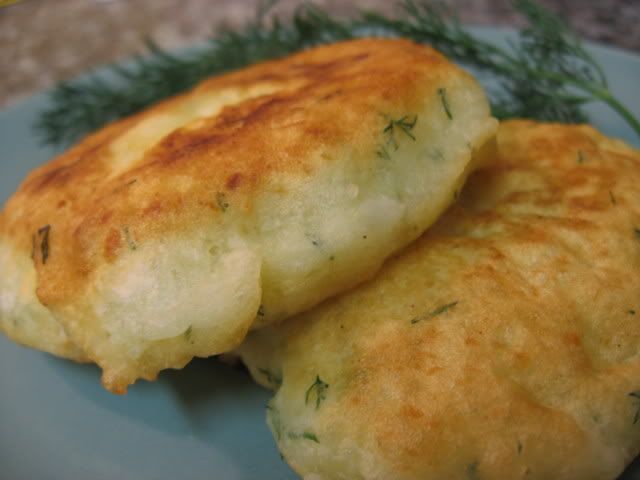
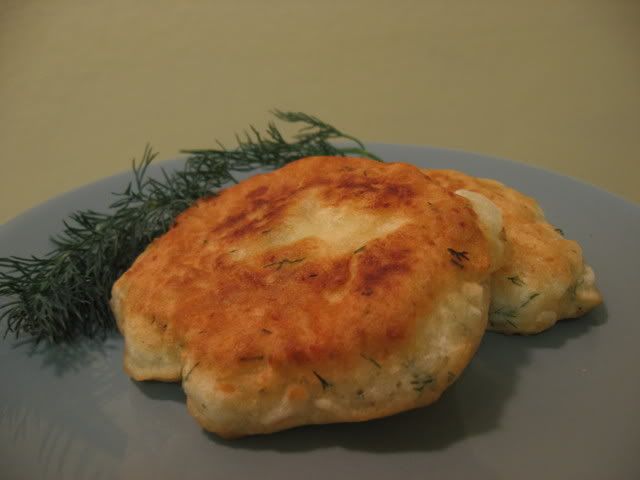
In yesterday's Potato Kneidlach post I mentioned that I would share with you another use for leftover batter from those fabulous potato dumplings. Here are the photos I promised. The kneidlach batter makes delicious and unusual gluten-free potato pancakes - They are not latkes, but rather are pancakes with a very chewy, somewhat cakey texture and a crispy exterior. If you enjoy the chewy sweet rice flour pancakes of some Southeast Asian cuisines, you will definitely enjoy these. I enjoyed these plain for breakfast two days in a row. They taste good alone, or try melting cheese over them, or serving them with ketchup or lemon-butter. They'd also be a good accompaniment to a meat dish or vegetable stew.

I've written all the ingredients out below- If you have already made the batter for the potato kneidlach, simply use that for the pancakes. The only other ingredient you need is the 2 additional tablespoons of oil for frying. However, if you are making this recipe for the pancakes alone, you will see that I have reduced the quantity of potato starch in this recipe (as compared to the potato kneidlach recipe) because I think that will improve the texture. Feel free to leave the dill and pepper out of the recipe for wonderful sweet gluten-free Passover breakfast pancakes that could be served with syrup, fruit or jam.

PASSOVER POTATO PANCAKES WITH DILL
[Non-Gebrokts / Parve / Gluten-Free]


2 medium russet potatoes, peeled
2 Tbsp vegetable oil
2 eggs, beaten
1/4 - 1/3 cup potato starch
1/2 tsp salt
1/4 tsp ground white pepper
1 Tbsp fresh dill, minced
2 Tbsp vegetable oil for frying

Cut potatoes into large chunks and boil in water until soft. Drain and allow to cool. Once cool, mash with 2 Tbsp of oil, eggs, salt, pepper and dill. Stir in potato starch until thoroughly combined, and refrigerate the mixture for 1 hour.

Heat oil in a heavy non-stick pan over medium-high heat until shimmering. Place 1/4 cup of batter at a time into the hot oil, using the back of a spatula to press flat until each pancake is no more than 1/4 to 1/3" thick. Cook until golden-brown on each side (2-3 minutes per side), flipping once. Place on a plate lined with paper towel to absorb excess oil. Serve while hot.


Tuesday, March 27, 2007

Potato Kneidlach: Another Gluten-Free Matzo Ball Alternative


Potato kneidlach are light, fluffy potato dumplings for Passover that are a wonderful gluten-free substitute for matzo balls. I have loved these ever since I first made them for a gluten-free friend in 2005. I based this recipe off of one from The Passover Gourmet by Nira Rousso. My dad e-mailed me Rousso's recipe for potato dumplings a few years ago and I used that as the basis for these. This afternoon or tomorrow I will post about another delicious use for leftover potato kneidlach batter.

GLUTEN-FREE POTATO KNEIDLACH (PASSOVER DUMPLINGS)

2 medium russet potatoes, peeled
2 Tbsp vegetable oil
2 eggs, beaten
1/3 cup plus 1 Tbsp potato starch
1/2 tsp salt
1/4 tsp ground white pepper
1 Tbsp fresh dill, minced

Cut potatoes into large chunks and boil in water until soft. Drain and allow to cool. Once cool, mash with oil, eggs, salt, pepper and dill. Stir in potato starch until thoroughly combined, and refrigerate the mixture for 1 hour. Bring soup or a pot of lightly salted water to a boil. Use your hands to gently form rough ball shapes from one tablespoon of batter at a time, and submerge dumplings in the soup or water - If you prefer, you may use a soup spoon or ice cream scoop to move free-form spoonfuls of batter into the pot. Boil for approximately 5-6 minutes - The dumplings will float up to the surface quickly but will need several additional minutes to cook all the way through.

Serve in soup, or as a side dish with butter or margarine and fried onions.

Friday, March 23, 2007

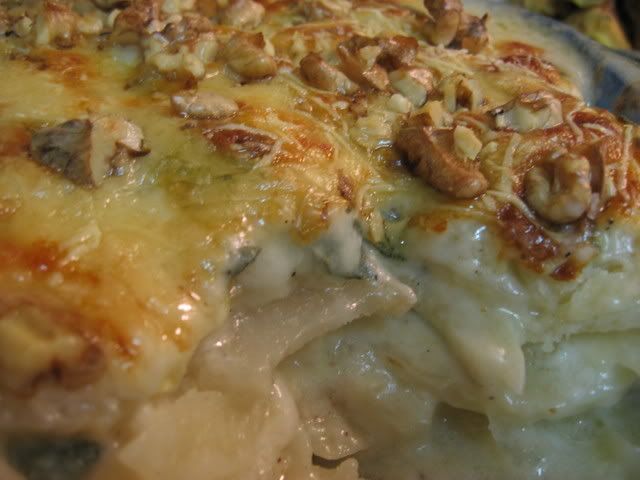
Walnut-Sage Potatoes Au Gratin


I "auditioned" a dish for Passover this week... The recipe is from user Annacia on RecipeZaar, with minor gluten-free adjustments. I offered to review the recipe for her, thinking it might work if I had a vegetarian seder. It looks like I won't be having a vegetarian seder, but this dish is a sure winner. It might just be my new favorite potato dish, second only to kugel. It is so decadent and flavorful, and reheats very well in the oven or microwave.

I have to admit I was tempted to add a lot more cheese than the recipe calls for- And ultimately, I did add a bit more to the top of the casserole at the end, and then stuck it under the broiler for 30 seconds. I like to think I made up for this by using 2% milk instead of whole, but I suppose it doesn't work that way. Oh, well. It sure was good. Don't use American-style gruyere if you can help it - make sure to find a gruyere that is Swiss, otherwise use fontina or emmenthal or another good melting cheese with a little bit of bite to it.

To make a gluten-free roux for this dish I used arrowroot flour, a fine powder which works wonderfully as a flour substitute in gravies and cream sauces. You can try using other thickeners, but stay away from gluten-free flour mixes that contain nuts or other darker or coarser particles (for example, Pamela's Baking and Pancake Mix) as you will not achieve the smooth, white consistency you are going for with a white sauce. Cornstarch is not recommended since it becomes gummy when the dish cools or is refrigerated. I've had good luck with both Asian sweet rice flour (also called sticky rice flour or glutinous rice flour) and arrowroot, which are both finely ground and white in color. For Passover, I would try using heavy cream instead of 2% milk, and using potato starch as a thickener (adjust the quantities as necessary).

This is a terrific way to use one of my favorite new ingredients, walnut oil. It is well worth seeking out walnut oil for this recipe, because it has such a beautiful flavor. Trader Joe's is now carrying it, which means it's sure to become a staple in many kitchens within the blink of an eye. It looks like Gefen and Nutola both make kosher l'pesach walnut oil. This dish also shows off the complexity of fresh sage in a way that is lovely. The sage, walnuts, and walnut oil work together to make this a more sophisticated and less pedestrian gratin. Thanks, Annacia!

WALNUT-SAGE POTATOES AU GRATIN

6 medium russet potatoes (2 lb.)
1/2 cup chopped onions
5 garlic cloves, minced
3 Tbsp walnut oil
4 Tbsp potato starch (for Passover) or arrowroot flour
1/2 teaspoon salt
1/4 teaspoon pepper
2 1/2 cups 2% or whole milk
3 tablespoons snipped fresh sage
4 ounces Swiss gruyere cheese, shredded (1 cup)
1/3 cup broken walnut pieces
Fresh sage leaves (optional)

Peel potatoes and thinly slice. Use a knife or the thin slicing blade on the food processor. Slices should be no thicker than 1/4." Place slices in a bowl, submered in cold water to keep from browning.

In a medium saucepan on medium to medium-high heat, cook the onion and garlic in walnut oil until tender but not browned. Stir in flour, salt, and pepper, then quickly add all of the milk. Cook over medium heat, stirring constantly with a whisk until thickened and bubbly. Remove from heat; stir in snipped sage.

Grease a 2-quart round casserole (with glass cover) or a deep 2-quart baking dish. Layer half of the potatoes in casserole. Cover with half the sauce. Sprinkle with half the cheese. Repeat layering with the potatoes and sauce. Cover with lid or tented tinfoil.

Bake uncovered at 350 F for 40 minutes, then uncover and bake 25-40 minutes more or until potatoes are tender. Sprinkle remaining cheese and all of the chopped walnuts over top. Bake, uncovered, 5 minutes or until cheese is melted and bubbly. Let stand 10 minutes before serving. Garnish with remaining sage leaves.


Friday, January 12, 2007

Leek Fritters: An amazing recipe, followed by a food blogger's worst nightmare

I cooked something gloriously delicious last night - A gluten-free adaptation of a Sephardic leek fritters, known in Greek as Prassokeftedes or Keftikes de Prassa. The recipe this is based on is by Chef Kate, a user on RecipeZaar. These are traditional for Passover in many mediterranean Jewish families, who make them with matzo meal. Because I used breadcrumbs (Ener-G brand), this recipe isn't kosher for Passover. However, you should be able to replace the breadcrumbs with additional egg and some potato starch to help keep the patties together during Pesach. I served them with Green Olive Relish, a recipe from RecipeZaar user Jewelies. You might also try making a tzatziki sauce to drizzle over the fritters.

Where does the ominous-sounding Food Blogger's Worst Nightmare part of the story come in? Well, just as I finished arranging these dishes on some lovely new plates I just bought... The screen on my digital camera went blank. My precious camera is broken, and I'm fairly sure it is beyond repair. It is definitely no longer covered under warranty. I could have cried - But instead, I suddenly realized that I have a brand new camera phone! G-d bless cell phone technology - At least I can give you a general sense of what these look like. Make these fritters, and I promise you'll forget about the terrible photographs!

PRASSOKEFTEDES (LEEK FRITTERS)

2 large potatoes, peeled and cubed
2 lbs leeks
2 large eggs, lightly beaten
3/4 cup gluten-free breadcrumbs
2 teaspoons salt
2 teaspoons fresh ground black pepper
2 tablespoons fresh oregano leaves (or 1 teaspoon dried)
Olive oil, for frying

Preheat oven to 200 F.

Trim and carefully wash leeks, removing the dark green part but leaving the white and light green areas. Go between the outer layers to remove sand and dirt. Slice in half lengthwise, then slice thinly crosswise.

Add one teaspoon of salt to about 1 1/2 quarts of water in a pot. There should be enough water to cover potatoes by at least two inches. Bring to a boil, then reduce to simmer and cook until soft (approximately 10 minutes).

Drain in colander, then place in large bowl. Use a potato masher to mash until smooth. Place the sliced leeks in a steamer basket over boiling water. Steam for 10 minutes, then remove from heat. Add the leeks to mashed potatoes. Stir in eggs, breadcrumbs, salt, pepper and oregano. Mix until all ingredients are thoroughly combined.

In a heavy skillet over medium-high heat, heat 1/2" of olive oil. When it is very hot, use a spoon to drop about 2 tablespoons of the mixture at a time into the oil. Flatten a little with the back of a spoon. Fry until golden-brown (about 3 to 4 minutes) and then flip. As you finish each batch, use a slotted spatula to move them to a paper-towel-lined plate. Keep them warm in the oven until ready to serve.


GREEN OLIVE RELISH


1 15-ounce can of green olives, pitted and roughly chopped
1/4 cup fresh parsley, roughly chopped
1/4 cup fresh basil leaves, roughly chopped
2 tablespoons pine nuts, lightly toasted
Zest and juice of 1 lemon
1 clove garlic, finely chopped
1/4 teaspoon dried chili pepper flakes
1 tablespoons capers, chopped, rinsed and dried
3 tablespoons extra virgin olive oil
1 tablespoon balsamic vinegar

Combine all ingredients in a bowl, and serve at room temperature.

Friday, January 05, 2007

Coconut Mashed Yams

In my book, you can't go wrong with coconut. It is amazingly versatile and I enjoy it in all its many forms, particularly rich and creamy coconut milk. This flavorful side dish is ever-so-slightly adapted from a recipe in The Millennium Cookbook. Written by chefs at San Francisco's own upscale vegan eatery, Millennium Restaurant, this cookbook is one of my all-time favorites. I've had my copy for 6 years and it's splattered and sticky from all the times I've used it [I am not a neat cook. At all.] All the recipes I loved best in this book before going GF happen to be gluten-free or easily adapted. These yams are truly addictive. They are a beautiful bed for a filet of fish, and a perfect complement to Caribbean-inspired dishes such as jerked meat or tempeh. I've even been known to eat the leftovers cold, straight from the refrigerator!
Note: What is referred to here as a "yam" is actually technically the Garnet variety of "sweet potato" (bright orange flesh, dark orange skin). A lot of Americans, including myself and the authors of this cookbook, use the two interchangeably and inaccurately.

COCONUT MASHED YAMS

2 large garnet yams, peeled
1 teaspoon olive oil
4 cloves of garlic, minced
1 teaspoon dried thyme
1/4 teaspoon allspice
1 teaspoon sea salt
1/2 cup coconut milk (light or full-fat, no sugar added)
1/4 teaspoon ground white pepper

Heat oil in small saute pan over medium heat. Add the garlic and thyme and saute until the garlic is golden. Remove from heat.

Slice the yams into 2-inch cubes. Bring 2 quarts of water to a boil. Add the yams and boil for 15 minutes or until the yams are soft. Drain in a strainer and then return to pot. Add sauteed garlic and remaining ingredients. Mash until creamy, using a potato masher. Serve hot.

Thursday, December 21, 2006

Celery Root and Potato Latkes

I hope you're not tired of latkes already, because I have one more recipe for you. Don't worry, Chanukah's almost over and I'll move on to less greasy foods. I promise.

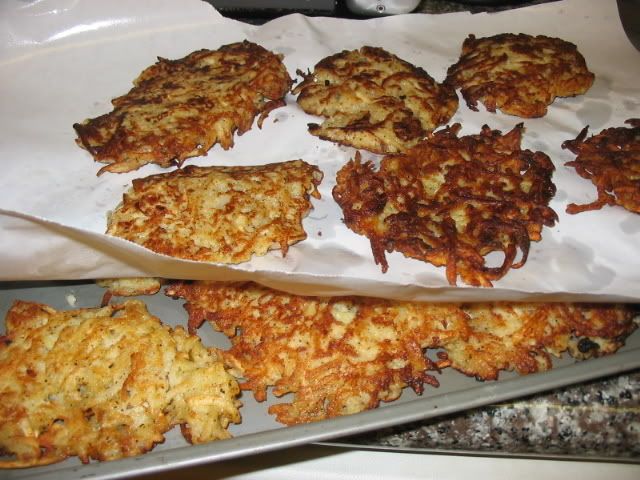
This time, I combined the distinctive taste and wonderful crunch of celery root with the usual starchy Russet potatoes. I created this particular gluten-free latke recipe with the intent to freeze most of them, which is why it instructs you to make each latke into a well-packed patty to create a more cohesive pancake rather than loosely spreading the batter out to make a thin, lacy latke. I loved the flavor and the texture, and I ate a bunch of them for dinner, topped with applesauce. My freezer is now happily filled with many ziploc bags full of latkes.


CELERY ROOT AND POTATO LATKES

4 large Russet potatoes
1 large celery root (approximately .75 lbs)
1 1/2 large onions
2 cloves garlic
2 teaspoons salt
1 tablespoon ground black pepper
3 eggs, beaten
1 cup Pamela's Baking Mix* or other rice-based gluten-free flour mix
Olive oil for frying

Preheat oven to 200 degrees or "warm" setting.

Peel potatoes and submerge in cold water. Peel celery root with a paring knife. Pulse the onion and garlic in food processor. Mixture should be coarse, not completely pureed. Pour onion-garlic mixture into a large bowl. Grate the celery root using the larger grate of a box grater, or use the grater attachment of a food processor. Add to onion-garlic mixture and stir. Grate potatoes.

Quickly squeeze a handful of grated potatoes at a time over a second bowl (or the kitchen sink) to remove all liquid. Add the dry potatoes to the onions and celery root, mixing as you go. This step should be done as quickly as possible to prevent oxidation of the potatoes.

Heat 1/4 inch of olive oil in a large, heavy skillet (cast iron works best) over medium-high heat, until just below the smoking point.

Add remaining ingredients to the batter, and stir until fully combined. Place a small handful of batter (approximately 1/4 cup) in the hot oil at a time. Pat each handful into a 1/2" thick pancake shape before placing in oil - This will help each latke stay together. Fry until completely golden-brown on the bottom and crispy around the outside corners. Flip and brown on the second side.

Transfer latkes to a plate lined with paper towels or several layers of brown paper (I use grocery bags). Allow paper to absorb excess oil, then transfer latkes to a cooking rack placed over baking sheet in the preheated oven, where they will stay warm until ready to serve. Serve hot, with sour cream and applesauce.

Extra latkes can be frozen on a baking sheet in the freezer, with parchment paper or freezer paper between the layers. When frozen, transfer to ziploc bags. Reheat in oven at 400 degrees F.

Makes 6-8 servings.


*Edited 3/09 to add: Pamela's baking mixes are under kosher supervision but are not certified by a mainstream kosher certifying agency, so most people who keep strictly kosher kitchens will want to use another gluten-free all-purpose flour mix such as Arrowhead Mills Gluten-Free All-Purpose Flour Mix. I no longer use Pamela's products in my house since I now have a more strictly kosher kitchen. If in doubt, check with your rabbi!
Tuesday, December 19, 2006

Gluten-Free Latkes (Potato Pancakes)

Ah yes, the obligatory latke post. This is more or less my family potato latke recipe, but made with a gluten-free flour mix instead of matzo meal. The rice flour mix works wonderfully. We gobbled them up so fast last night that by the time my friend Poet With a Day Job reminded me to take photographs there were only three sad, cold latkes left. I was in such a food coma I slapped them on a paper plate, gussied them up with some sour cream and cranberry applesauce, and took a lazy, crappy photograph. Sorry folks, you're just going to have to take my word for it that these puppies are some top of the line latke specimens.

It made my day yesterday to be able to hook two other gluten-free friends up with latkes and sufganiyot. Chanukah is so much more full of naches* when you don't have to worry about getting glutened.

*Yiddish for "joy"

POTATO LATKES

4 pounds Russet potatoes
1 large onion, peeled
2 teaspoons salt
1 tablespoon ground white pepper
1 cup Rice Flour Mix
3 eggs, beaten
Olive oil for frying

Preheat oven to 200 degrees or "warm" setting.

Peel potatoes and submerge in cold water. Grate the onion into a large bowl. Grate the potatoes using the larger grate of a box grater, or use the grater attachment of a food processor.

Quickly squeeze a handful of grated potatoes at a time over a second bowl (or the kitchen sink) to remove all liquid. Add the dry potatoes to the onions and mix as you go. This step should be done as quickly as possible to prevent oxidation of the potatoes.

Heat 1/4 inch of olive oil in a large, heavy skillet (cast iron works best) over medium-high heat, until just below the smoking point.

Add remaining ingredients to the batter, and stir until fully combined. Place a small handful of batter (approximately 1/4 cup) in the hot oil at a time, gently pressing each latke with the back of the spatula so that it is no more than 1/3" thick. Do not press too hard, as the latkes will be more crispy if the the batter is not densely packed and each latke is thin and lacy (space in between the pieces of potato). Fry until completely golden-brown on the bottom and crispy around the outside corners. Flip and brown on the second side.

Transfer latkes to a plate lined with paper towels or several layers of brown paper (I use grocery bags). Allow paper to absorb excess oil, then transfer latkes to a cooling rack placed over a baking sheet in the preheated oven, where they will stay warm until ready to serve. Serve hot, with sour cream and applesauce.

Extra latkes can be frozen on a baking sheet in the refrigerator, with parchment paper or freezer paper between the layers. When frozen, transfer to ziploc bags. Reheat in oven on 400 degrees F.

Makes 6-8 servings.

Sunday, November 05, 2006

Gluten-Free Knishes: Mission Accomplished

gluten-free knish[Edited 3/09 to add: Chebe mixes are no longer kosher certified! What a bummer. I will have to rework this recipe using a dough made from scratch.]

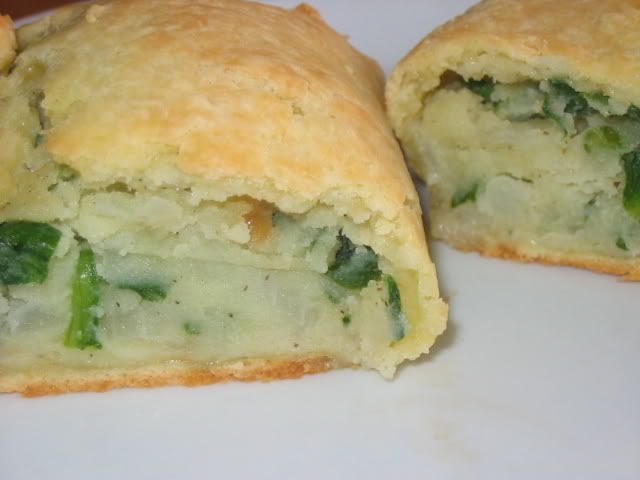
I've written before about my fear that I would never get to eat the Eastern-European Jewish foods I grew up with again when I went gluten-free. Kasha varnishkes, matzo balls, challah, potato knishes. I found gluten-free recipes online for most of the foods I missed, but the one thing I couldn't find anywhere was a recipe for a gluten-free knish. When I started this blog, I gave you my word that by the end of October I'd create a knish recipe. Well, I'm 4 days late, but consider this mission accomplished: A delish knish!

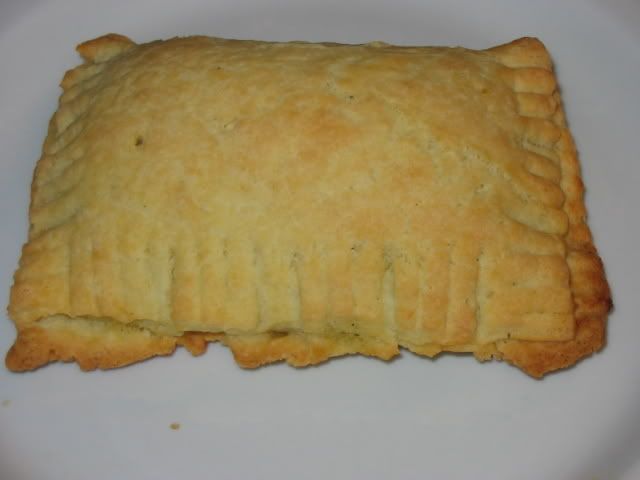
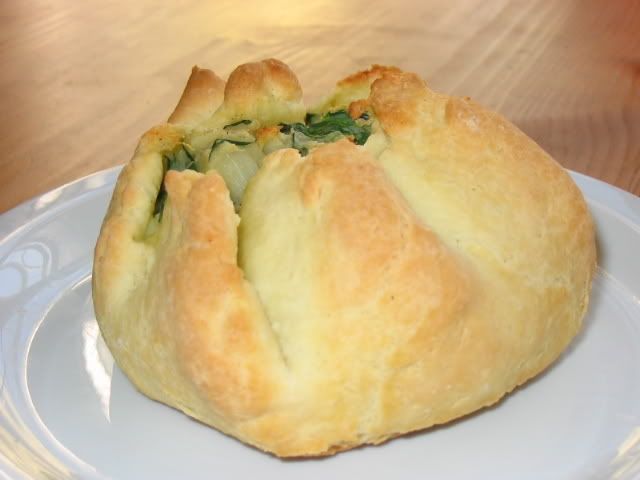
This recipe gives instructions for rectangular knishes, which are the easiest to make. However, if you're interested in making them round, simply use a 3-inch biscuit cutter to make circles instead of rectangles, and follow this diagram for folding.

GLUTEN-FREE SPINACH POTATO KNISHES

Dough:

1 7.5-ounce package Chebe All-Purpose Gluten-Free Bread Mix
2 large eggs
2 tbsp oil or softened margarine
5 tbsp milk, liquid milk substitute, or water
3 tbsp oil or beaten egg, set aside

Filling:

1 cup fresh baby spinach, chopped finely
1 large baking potato
1 tbsp vegetable oil
1 tablespoon butter
1/2 large onion
1/2 tsp ground black pepper
1 1/2 tsp kosher salt
1 large egg
Cooking spray

Preheat oven to 375 F. Grease a baking sheet thoroughly with cooking spray.

Dough Instructions:
Using a fork or a dough mixer, blend the contents of the Chebe mix packet in a bowl with 2 tbsp oil or softened margarine and 2 eggs. Add 5 tbsp of milk, milk substitute or water while continuing to mix. Knead dough with hands until all ingredients are fully blended and the dough is smooth. Roll dough into a ball. Using a rolling pin, roll dough to a thickness of 1/4 inch or less. Using a knife or pastry scraper, cut into 5x7 inch rectangles (Scraps of remaining dough can be kneaded together and re-rolled to create additional rectangles).
Filling Instructions: Peel potato, cut lengthwise and then into 2-inch slices. Bring a pot of water to a boil. Add 1 teaspoon of kosher salt. Add potato pieces to the water, and boil until tender. Turn off heat. Drain potatoes and return to pot. Mash thoroughly. Add chopped spinach to potatoes, and mix until combined. Cover with lid to keep warm.

In a frying pan over low heat, add butter, oil and onion. Cover and cook for 10-15 minutes or until soft, then remove cover and cook until the onions begin to turn golden brown. Remove from heat. Add onions to mashed potato/spinach combination, as well as pepper and 1/2 teaspoon of kosher salt. Stir in one egg. Use wooden spoon or masher to combine.

To Assemble: Using a pastry scraper, carefully transfer each rectangle of dough to the greased baking sheet. Place a small amount of the mashed potato mixture (approximately 2-3 tablespoons) in the center of each rectangle, arranging it so that it there is at least a 1 1/2 inch perimeter of dough around the filling on all sides. Make absolutely sure that no filling or liquid gets on the perimeter of the dough, as it will keep the knish from sealing. Fold dough over widthwise (shorter side to shorter side). Use a fork to crimp the edges of the dough. Make sure all edges are sealed, and patch any holes with small scraps of dough.

Brush the 3 tbsp of oil or egg you have set aside over the top of each knish. Bake for 20-25 minutes, or until golden. Eat while hot or warm. Refrigerate or freeze leftovers and reheat in the oven (without defrosting). Makes 5-6 knishes.

Rectangular Knish:

gluten free knishes
Round Knish:

round gluten-free knishes

Friday, October 27, 2006

Potato Kugel

A friend requested my potato kugel recipe. For those who don't know, kugel is a baked Jewish casserole with many variations. The recipe I use is this one. Use a lasagna pan and it will turn out just thick enough to be creamy on the inside while the outside becomes brown and crispy. It has a nice zing to it when you add fresh ground pepper, and it freezes well. It's meant to be a side dish for dinner, but it makes a perfect breakfast food, too.

When Manischewitz starts making its kosher-for-passover potato-based egg noodles (only available near Passover time) I will stock up on them and work on a gluten-free noodle kugel recipe... Which is one of the foods I'm missing the most.

Thursday, October 19, 2006

Balsamic-Honey Roasted Root Vegetables

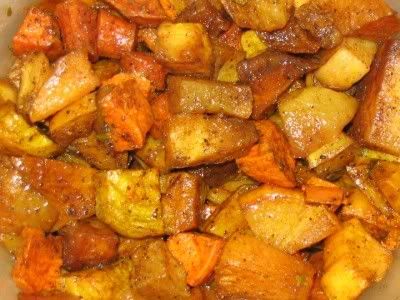
This is an easy side dish using ingredients that are bountiful in fall and winter but available all year round in most regions of the U.S. Of all the recipes I've posted on RecipeZaar, this is the one that's been bookmarked the most. It features one of my favorite flavor combinations: Roast garlic, fresh rosemary and honey. All measurements are approximate and substitutions can easily be made. Try switching out different root vegetables, using whatever you have in your fridge or can find at the farmer's market - I once successfully made this dish with just white potatoes and carrots. No obsessive measuring is necessary, which is great for us lazy cooks. I usually serve this dish hot but is also very tasty at room temperature, either solo or mixed in with spring greens and a balsamic vinaigrette or gluten-free "goddess" (tahini and lemon based) dressing.

Balsamic-Honey Roasted Root Vegetables

5 carrots, unpeeled, in 3/4 inch slices
1 large yam / sweet potato, peeled, in 1 x 1 inch cubes
1 large rutabaga, peeled, in 1 x 1 inch cubes
4 turnips, peeled, in 1 x 1 inch cubes
3 stalks celery, in 3/4 inch slices
1 large parsnip, in 3/4 inch slices
3 yellow beets, peeled, in 1 x 1 inch cubes
6 garlic cloves, unpeeled
2-3 small boiling potatoes, in 1x1 inch cubes (Yukon or New varieties)
1/4 cup olive oil
1/4 cup balsamic vinegar
1/3 cup honey
1 teaspoon fresh rosemary, minced
1/2 teaspoon salt
Fresh ground black pepper, to taste

Preheat oven to 375 F degrees.

Cut the bottom 1/4 inch of each garlic clove off but do not peel cloves.

Toss ingredients in a large, deep baking dish or roasting pan.

Roast, uncovered, for approximately 30 minutes or until all vegetables are soft throughout. Toss vegetables and turn heat up to 400 F degrees. Roast until vegetables are browned and caramelized (15-20 minutes).

Serve hot or at room temperature. Makes about 8 servings.

Wednesday, October 11, 2006

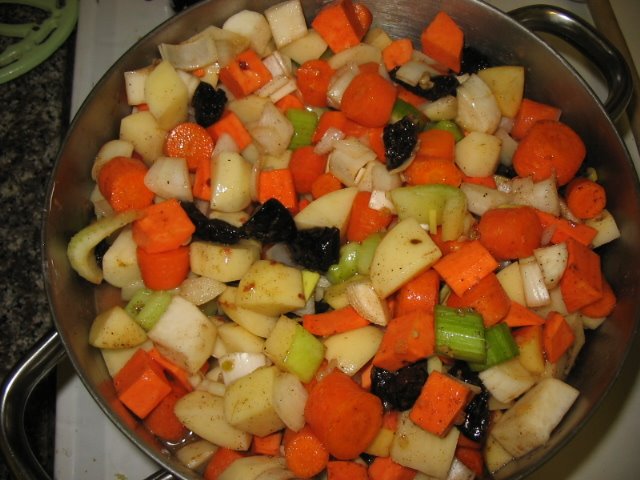
Tzimmes

Fall is the time of year for root vegetables and long-simmered stews. Sweet foods are traditional for Rosh Hashanah because they symbolize a sweet new year, and thus sweetness is incorporated even into non-dessert dishes. In that spirit, many Jews of Eastern European descent celebrate with a sweet stew called tzimmes. It's typically served as a side dish with brisket or some other meat. I had lots of sweet potatoes and carrots in my fridge so I e-mailed my dad for his recipe. But like much of the Jewish cooking in my family, there is no recipe, just some vague tips to structure culinary improvisation. My dad says:
Tzimmes is like chow mein or stew---almost anything goes. Try sauteing an onion and the adding sweet potatoes, carrots, prunes (if you want), orange juice, cinnamon, an apple or two (if you want), and a bit of brown sugar or maple syrup (if you want) and bake covered at 350 for an hour covered tightly OR cook on low heat on the stove for about the same time (stir occasionally so it doesn't burn. How's that, bubbelah?
I wanted to combine his suggestions with some other recipes, so I cracked open my trusty Jewish cooking bible, Mama Leah's Jewish Kitchen. Mama Leah is a close friend of my family and is truly the Queen of Blintzes. I used her pareve Tzimmes recipe as the basis for my project this evening.

Tzimmmes, before cooking:

tzimmes

Tzimmes, after cooking:

gluten-free tzimmes
The result was sweet and peppery, and tasted much like I remembered from my childhood. The only thing missing was the brisket!

Tzimmes

10-12 large carrots, peeled and cut into large chunks
2 large russet or Idaho potatoes, peeled and cubed
3 yams or sweet poatoes, peeled and cubed
1 medium onion, diced
2 stalks of celery, in 1" slices
2 cloves of garlic, crushed
18 large pitted prunes, cut in half
1/4 cup honey
1.5 apples, unpeeled and cubed
1 teaspoon salt
1 teaspoon ground black pepper
2.5 cups orange juice
1.5 teaspoons cinnamon

Place all ingredients in a pot. Cover and bring to a boil. Reduce heat to low and simmer for about 1 hour. Stir frequently. Cook until carrots are soft but not mushy. Tzimmes should have the consistency of a thick stew with very little liquid left in the pot. Serve hot.