KOSHER RECIPES FOR GLUTEN-FREE LIVING


Showing posts with label ingredients. Show all posts

Wednesday, April 02, 2008

Sugar-Free Pecan Coconut Macaroons - A Gluten-Free Treat for Passover and Year-Round

When the Mid-Hudson Valley Gluten-Free Outings Group had our Valentine's Day Gluten-Free Cookie Swap back in February, I encouraged members to consider making a recipe that would accommodate people with food restrictions beyond just celiac disease or gluten intolerance. So I decided to take upon myself the project of creating a gluten-free sugar-free cookie. I'm not usually a big fan of Splenda but I figured I'd give it another shot - At least my mother, who was doing the South Beach Diet, would eat the cookies, right? My other hope was that I'd figure out a way to finally make a macaroon that I'd like and that I could make with little to no sugar for when Passover rolled around.

Well Passover is nearly here. Splenda is NOT kosher for Passover except in its industrial version. However, I think these cookies would taste just fine with another dry alternative sweetener such as granulated fructose, artifical sweetener (not my preference), certain sugar alcohols, maple sugar... whatever you can find that's kosher for Passover -- I'm not sure what's on the market because I don't plan on eating many sweets this Passover. Of course, if you eat sugar, you can save yourself the trouble by making this recipe with plain old white sugar.

I have cut the Splenda amount in this recipe from the amount I used when I originally baked these, since I found them too sweet. Coconut and pecans have their own sweetness to them and I wanted their flavor stand out in all its glory. In fact, I'm even considering making these for Passover without any sweetener at all!

This was my first time trying pecan and coconut flavors combined, and I discovered I love this duo! Better, in fact, than the traditional almond-coconut macaroon combo. I'm not sure if there is a kosher l'pesach brand of ground pecans, but you can always buy some pecans and pulse them in a food processor (or little by little in a coffee grinder) until they have a relatively fine, sandy consistency. Voila, pecan flour!
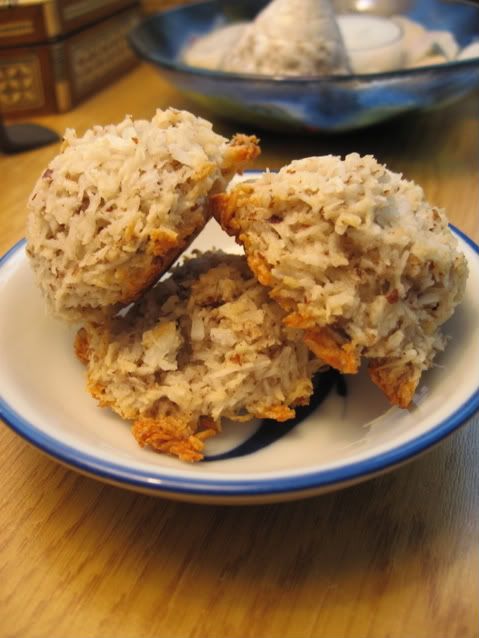


PECAN COCONUT MACAROONS

[ Gluten-Free / Dairy-Free / Pareve / Soy-Free ]

Adapted from Low-Carb Dessert Blog

Makes approx. 24 cookies

4 egg whites
1 tsp vanilla
1/4 tsp salt
1/4 cup Splenda* (if they're not for Passover), white sugar, or the equivalent amount of a kosher l'pesach alternative sweetener
1/2 cup plus 2 Tbsp ground pecans
2 cups dried shredded unsweetened coconut

Preheat oven to 325 F. In a large mixing bowl, whip the egg whites, salt and vanilla until frothy with an electric mixer. Slowly pour in the Splenda or other dry sweetener. Whip until stiff peaks form. Gently fold in the ground pecan and coconut gently. Do not over-stir - Batter should remain frothy.

Line a cookie sheet with parchment paper. Use a tablespoon measure to drop rounded tablespoons of batter onto the paper 1/2 inch apart. Remember that they won't rise or expand! Bake for about 20 minutes, or until golden brown around the edges (let them get a little browner than in this photo!). Turn off the oven heat, open the oven door slightly, and let the macaroons sit in the oven until cool to keep them from becoming overly moist.

*The Splenda available in retail stores is not kosher for Passover.

Sunday, August 19, 2007

Un-Cooking: Garlic Scape & Toasted Pumpkin Seed Pesto


Dear readers, please forgive my seasonal inappropriateness.

I tend to eat, and blog, both seasonally and locally as much as possible. My recipes reflect that. This pesto is something I made back in early July. I wrote the recipe down and photographed it, but never did anything with it. Today I was daydreaming about this pesto's delightfully complex balance between the sharpness and sweetness of garlic scapes and the nutty comfort of toasted pumpkin seeds (pepitas), and I realized that though garlic scapes are now out of season (June is the prime month for them in most places), I should blog about this recipe before I lose the envelope it's scrawled on. So I hope you'll pardon me for blogging about a delicacy you can't obtain. See this as a reminder that as summer starts to wind down it is a perfect time to start thinking about what we look forward to cooking next spring and summer, or use it as an impetus for some of you gardeners to consider adding garlic to your garden plans for next year!

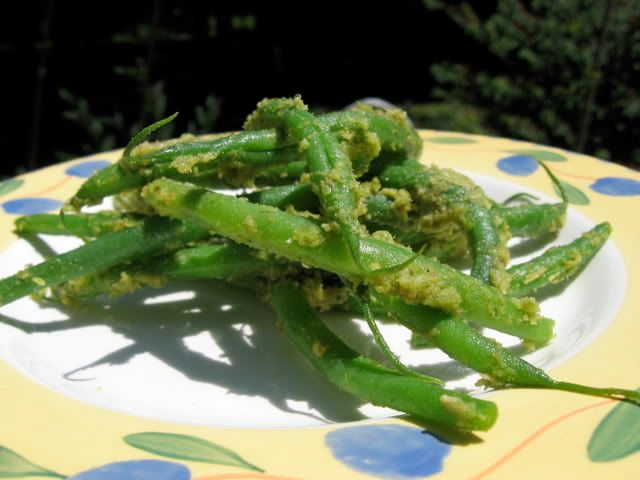
Since most of us don't follow recipes without tweaking them a bit, it occurred to me that this recipe could be a great jumping-off point for some experimentation. Maybe this recipe would be fabulous with lightly sauteed scallions and/or roasted garlic instead of scapes. Or with lightly steamed green beans pureed into the pesto with raw garlic. I can imagine that roasted leeks would also be a wonderful replacement for scapes. As far as I'm concerned, finding replacements for seasonal ingredients is always an enjoyable challenge.

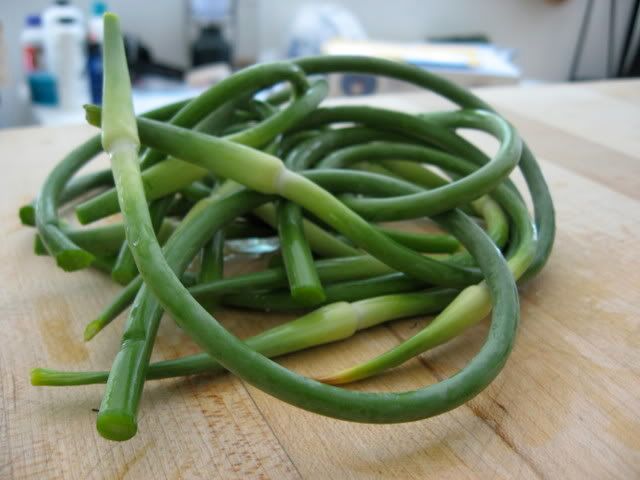
"What is a garlic scape?" ask the uninitiated, whose ranks I was a member of until this year. Why, I couldn't explain it any better than this Washington Post blogger, who writes:
The "scape" in question is hardly a typo or a secret code word; it's shorthand for garlic scape, a part of the garlic plant that is a garlic lover's nirvana.

Here's the anatomy lesson: Garlic and its relatives in the allium family, (leeks, chives, onions) grows underground, where the bulb begins its journey, soft and onion-like. As the bulb gets harder (and more like the garlic we know), a shoot pokes its way through the ground. Chlorophyll-green like a scallion (maybe even greener), the shoot is long and thin and pliable enough to curl into gorgeous tendrils.

This stage of growth is the garlic scape, folks. If left unattended, the scape will harden and transform from green to the familiar opaque white/beige color of garlic peel. Keeping the shoot attached will also curtail further growth of the bulb. So, in an effort to allow the garlic to keep growing, the farmer is getting a two-fer with this edible delectable that cooks are just beginning to discover.

The pesto I created is vegan, and truly has no need for the usual parmesan cheese. It is sharp with garlicky flavor from the scapes, which mellows over time. The nutty flavor of the toasted pumpkin seeds is just wonderful. This pesto can last for quite a while in the refrigerator. Try it tossed with steam vegetables, or mixed with steamed rice or quinoa. Spread it on fish before or after grilling or broiling. Mix it with hot Tinkyada brown rice pasta. Thin it with some additional olive oil and/or water to create a more saucy pesto that can be poured over salad, meat, fish, vegetables or grain dishes. Use it as a sandwich spread, or eat it alone on a crusty piece of bread. This is a versatile alternative to classic basil pesto or my fresh and clean tasting summery Cilantro-Lemon Pesto. I hope that next spring/summer when you see garlic scapes at your local farmers' market you'll remember this recipe and look it up... Or create an even more exciting use for these beautiful green spirals curlicues, and share it with us!


GARLIC SCAPE & TOASTED PUMPKIN SEED PESTO

[ Gluten-Free / Soy-Free / Dairy-Free / Vegan / Pareve ]


3 Tbsp lemon juice
1/2 cup pumpkin seeds, untoasted and unsalted*
Approximately 15 garlic scapes, raw or lightly sauteed
1/2 cup extra virgin olive oil
1/2 tsp sea salt
2 tsp nutritional yeast
Optional: ground black pepper to taste

Place pumpkin seeds in a dry, preheated skillet over medium flame. Stirring frequently, allow pumpkin seeds to toast until they brown slightly. They will puff up and start popping. Remove immediately from heat and pour into a bowl. Allow them to come to room temperature.

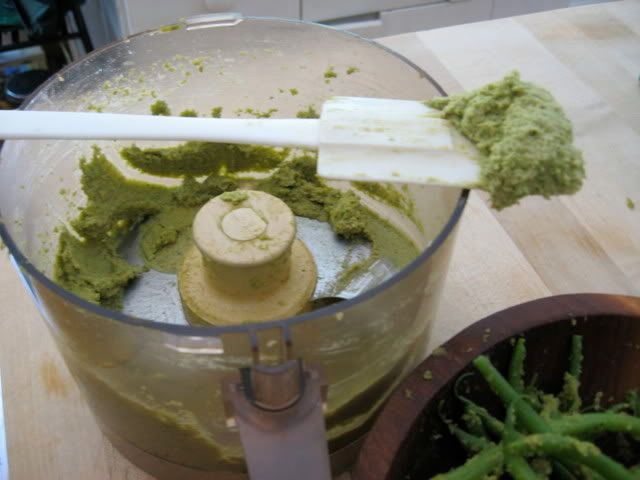
Cut scapes into 2 inch pieces. Add all ingredients to food processor and blend until smooth. Add warm water or additional olive oil to thin, if desired.

*Note: If you use pumpkin seeds that you removed from a pumpkin yourself (as opposed to pre-packaged, dry pumpkin seeds), you may want to try this method for preparing them.

This recipe is part of the Weekend Herb Blogging event, hosted this coming week by Real Epicurean.

Friday, February 02, 2007

Gluten-Free Italian Breadcrumbs

I've been saving the ends of all my loaves of gluten-free bread in a ziploc bag in the freezer, and adding to the stash any remaining slices of loaves of bread that become stale as well as storebought bread I brought home only to find inedible. When I had enough saved up, I finally got to put them to use. These breadcrumbs are wonderful for breading meat or vegetables, stuffing mushrooms, topping casseroles and more. Leave the spices out for "neutral" crumbs that can be used in any recipe - Or follow my instructions for flavorful Italian breadcrumbs that are perfect in most Mediterranean and American recipes.

ITALIAN GLUTEN-FREE BREADCRUMBS

12 slices gluten-free bread (stale bread and ends are good)
2 teaspoons salt
2 teaspoons dried parsley flakes
2 teaspoons ground black pepper
2 teaspoons garlic powder
1 teaspoons onion powder
1 teaspoons dried oregano
1 teaspoons dried basil

For fresh breadcrumbs:

Lay bread slices in a single layer on a baking sheet. Place in oven on 200 F for 10-15 minutes or until the edges have become a little hard and the bread has become dry to the touch but it has not become thoroughly toasted. Pulse in food processor until it reaches desired texture (crumbs should be distinct but not too large). Combine ingredients in a bowl.

For dry breadcrumbs:

Cube bread slices and lay in a single layer on a baking sheet. Place in a 325 F oven and bake until lightly browned, crisp, and very dry. Allow to cool. Blend in the food processor until it has a fine texture not much coarser than sand. Combine all ingredients in a bowl.

Bread crumbs can be stored in an airtight container or ziploc bag in the refrigerator for about a week for fresh breadcrumbs or 2-3 weeks for dry breadcrumbs. They can be stored in the freezer for up to 6 months.